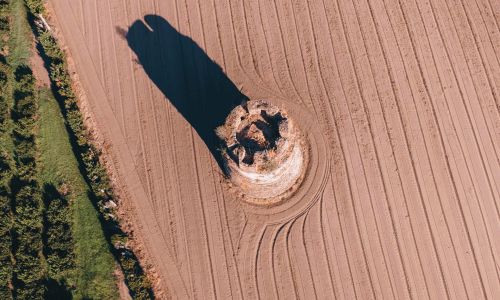
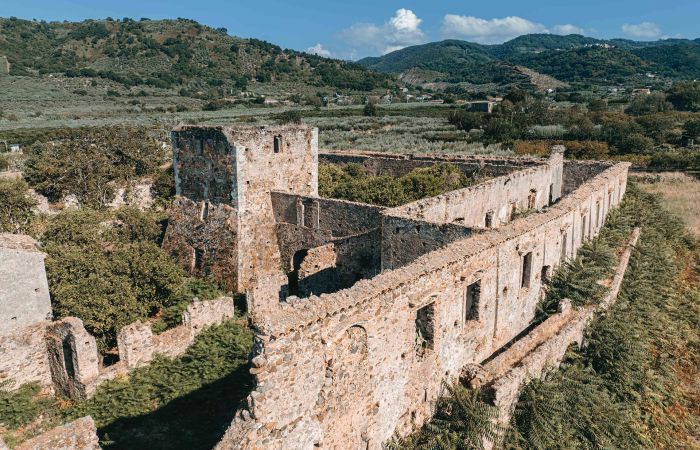


Between the 16th and 17th centuries, the Calabrian coast was among the most exposed areas in the Mediterranean to privateering raids conducted by Ottoman fleets and the Barbary Regencies of North Africa. Exploiting the vulnerability of coastal areas, corsairs launched swift attacks to raid settlements, steal livestock, and capture local inhabitants for sale in Maghreb slave markets. To counter this threat, the *Regia Camera della Sommaria* (Royal Chamber of Accounts) of the Kingdom of Naples planned and funded a dense network of watchtowers and defensive towers along the entire coastline. These outposts, manned by tower guards and mounted sentinels, were spaced to maintain visual contact; lighting a fire at night or sending smoke signals during the day allowed an alarm to spread along the coast within hours, giving the population time to seek refuge inland. The Lacconia Tower (also known as the Torre di Laconia)—built in the second half of the 16th century in the Verdello district, approximately 4 kilometers from the sea—is part of this complex defensive system. Historical records confirm that in 1572, the nearby settlement of Lacconia suffered a violent raid by Turkish-Barbary forces, resulting in the abduction and enslavement of many inhabitants. This dramatic event prompted the viceregal authorities to order a permanent strengthening of the area's defensive structures. The building visible today is largely the result of a later reconstruction; the devastating earthquake of 1638 had destroyed the original fortified palace to which the tower was attached. It was Prince Marcantonio Loffredo—who had succeeded the Caracciolo family as the feudal lord of Maida in 1605—who commissioned the rebuilding of the complex and the main tower. Architecturally, the structure is austere and square in plan—unlike the nearby, contemporary Torre di Mezzapraia, which features a circular design. The building rises over 11 meters above a truncated-pyramid base (talus) made of unplastered local rough stone, with corners finished in squared stone blocks. An elevated, arched passageway still connects it today to the adjacent Loffredo Ducal Palace, an imposing fortified noble residence that incorporates the tower itself.
Best time to visit
All year round.
Accessibility
The structure is located on flat ground and is accessible by car via farm roads. The outdoor area features uneven grassy terrain and slight changes in elevation that create natural barriers; the interior of the tower is hollow and cannot be entered. 24. Local culture
Local culture
Beyond tales of warfare and corsairs, the Ducal Palace complex preserves the memory of the plain's rural activities: inside, one finds the large granite millstones of an ancient oil press, while just a short distance away lie the remains of a small 15th-century church dedicated to Saint John the Baptist.
Recommended itinerary
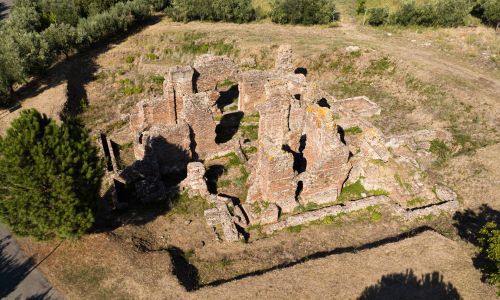
This outpost is connected to the area's main historical sites. A short drive or bike ride leads to the impressive Roman Baths of Acconia or the coast, where the Mezzapraia Tower stands.